Being on a podcast was a first for me, and of course immediately after I saw the episode posted I listened to it to see which things I wish I had said, said differently, or not said at all. One of the things I wish I had articulated more clearly is what I mean by “direct” violence. Put simply, my definition is when one individual’s behavior has an immediate and detrimental impact on another person. If a driver does not yield to a pedestrian, that is one individual’s behavior (the driver), having an immediate and detrimental impact on another (the pedestrian). In this example, someone might argue that so long as the pedestrian was not physically harmed, it was not direct violence. (While I could be convinced that physical harm is a necessary condition, for now and for reasons that will become clear a bit further below, I would refute such a claim.) However, a more critical observer would point to the ways in which mobility as it’s practiced in the US blurs the line between direct, structural, and cultural violence. For example, did the driver not stop because there was poor lighting (which might be a structural deficiency wherein road engineers failed to account for the visibility needs of the pedestrian)? Did the driver not stop because they were delivering an Uber Eats order (and thus is at the mercy of a much larger hustle culture that demands instant gratification and minimal friction)? Indeed, I think what people mean when they use the misnomer “accident” is that the crash (an accurate term) may not have been intended, and in our example one could argue that while means and opportunity were present, motive was lacking.
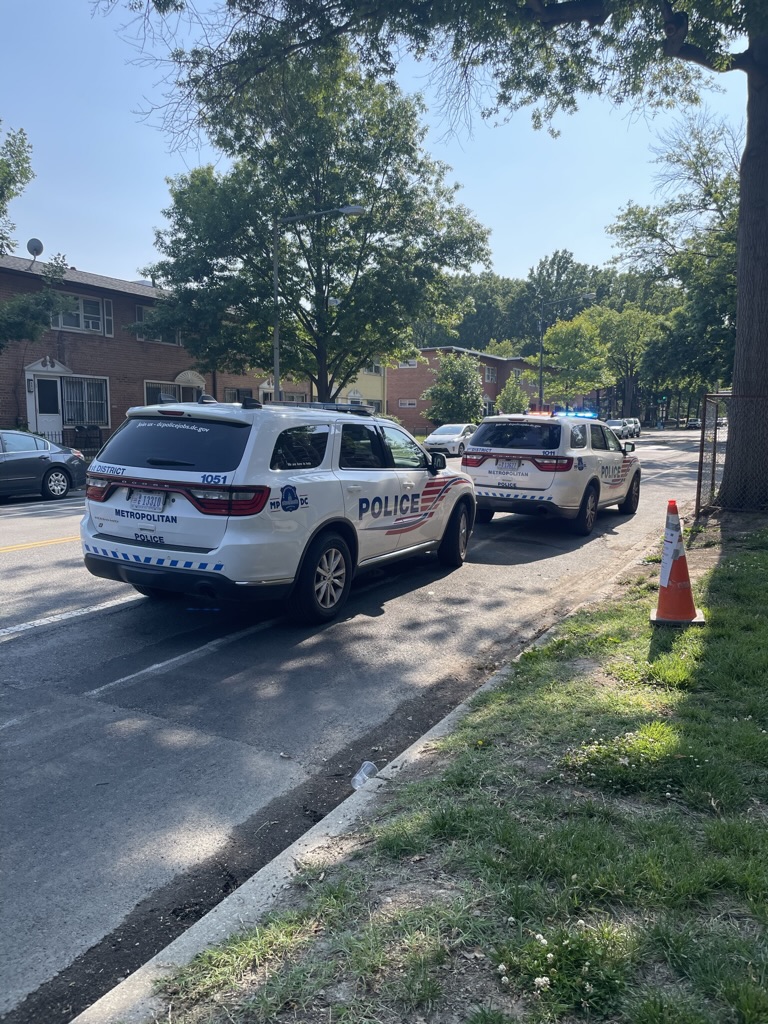
When we think about harm, though, we must take intentionality out of the equation. In the US, for instance, intentional and unintentional gun injuries are both considered part of “gun violence.” This approach is useful because it keeps attention on both the cause (guns) and the impact (harm to people), rather than centering debates on whether the shooter “meant it.” Similarly, focusing on cars rather than drivers might help us move beyond “us vs. them” debates that so often characterize fights over street space and toward wider-ranging strategies (which may or may not focus on the driver) to mitigate direct vehicular violence (just one of the many areas where I see concerning parallels between cars and guns in the US context).
This framing also helps ensure harms aren’t seen only from the driver’s vantage point – intent aside, a pedestrian or bicyclist’s experience of harm is real. In the example above, the pedestrian seeing their life flash before them, or being stripped of their dignity by someone unwilling to share the road with them, experiences direct vehicular violence even if the driver had no idea that a pedestrian was there (in and of itself a form of violence).
And of course, cars harm their users, too…even if motonormativity research suggests drivers might not realize (or care) about these impacts. Indeed, this conundrum makes me think about harm reduction, a strategy that is most often applied in drug use rehabilitation but could just as easily be applied to reducing vehicular violence:
Harm reduction is used to decrease negative consequences of <car> use without requiring abstinence <from driving>, recognizing that those unable or unwilling to stop can still make positive change to protect themselves and others. – Wikipedia (emphasis added)
Indeed, maybe the triangle of vehicular violence should be a square instead, since I don’t think Galtung accounted for the type of violence that occurs when people are willing to inflict harm on themselves in order to perpetuate oppressive power structures. One need look no further than Heather McGhee’s work in The Sum of Us; one of her main points is that white people in the US will often act against their own interests so long as Black people suffer more. Similarly, we continue to see drivers acting against their own interests – going so far as to be willing to risk their lives in crashes and lungs in air pollution – merely for the sake of driving.
In this way, perhaps we need direct and indirect violence – direct violence could be when it is experienced by another, and indirect violence could be when it is experienced by oneself. In either case, intentionality shouldn’t be considered because the two constants connect them both: a car caused a harm. If we could all agree on that, I would invite you to get curious – what comes to mind when you imagine less harm in our transportation system? ✌️🚸

 Peace and Planning
Leave a reply to On vulnerability – Peace and Planning Cancel reply