I recently read this Planetizen piece and as a fan of the television show The Good Place, I thought it was a brilliant idea to use a fun pop culture reference to explore a serious social problem through the lens of moral philosophy (and I was happy to see that an undergrad wrote it…dear author, may you not take the critiques that follow personally). The author drew connections between how our dependence on cars harms the environment, worsens climate change, and degrades our quality of life, all of which are solid points.
However, I grew increasingly frustrated by the omission of what seems like a very pertinent point. If we really want to talk about ethics, let’s talk about how every time someone gets behind the wheel, they risk killing someone. With more than 40,000 deaths on our roadways a year, we need to start talking about cars as the dangerous weapons they are, and to create regulations that reduce their potential for violence. (Of course talking about the sheer loss of life caused by car dependence ignores the millions of debilitating crash-related injuries suffered annually; the mental health impacts for those in a crash, those who witness a crash, and the loved ones left to deal with whatever long-lasting effects are caused by a crash; the tens of thousands of premature deaths due to air pollution and sedentary lifestyles facilitated by our reliance on cars every year…the list goes on.)
Despite this glaring oversight, I did appreciate the author’s attempt to view the debate about our transportation future through the lens of the ethical imperative of planning our communities in a way that considers the greater good. This must be part of our discourse, especially when we consider the other crucial ingredients that makes cars so destructive: the way we engineer our streets and plan our communities.
The urgency of framing the issue as a moral argument was made abundantly clear on a recent trip I took with family in California and Arizona, one with an itinerary chock full of destinations (from national parks to grocery stores) that were only accessible by car. (As an aside, after that trip we were in a midwestern metropolitan region – which shall remain nameless – where a visit to a friend’s house would’ve taken 11 minutes by car, an hour and a half by walking, and two and a half hours by public transit…having bad public transit is just as unethical as no public transit in my book 🙄.) Anywho, given my research and advocacy efforts, I was a devout follower of the speed limit when driving out west. Yet I was continually reminded of how hard it is to obey the law – both because the roads were designed for much higher speeds, and since they are, how much pressure there is from other drivers to drive at higher speeds. Drivers would get frustrated that I was driving the speed limit, and then tailgate, weave at speed, close pass, honk, and/or give visible and/or audible indications of their anger. In this way, I was struck by how much conflict is LITERALLY built into our built environment. It’s not just the potential for crashes, the gravest form of conflict we have in our mobility network…it’s also the countless instances of anger, hostility, and social dysfunction that play out on our streets daily. To me, that means there is a moral imperative for planners and engineers to consider their role in contributing to a built environment that foments isolation, competition, and aggression.
The importance of designing a built environment that fosters (maybe even forces) safe transportation behaviors is especially apparent when we consider how few other mechanisms can truly modify behavior in a way that reduces conflicts. A major (and dangerous) intersection in my neighborhood recently had a new signal installed ahead of a larger street redesign (and in advance of a long-term roll-out of a city-wide ban on right-on-red turns…the implementation of which, FWIW/IMHO, is going to fall far short of its aims) as a way to improve safety. Every time I’ve been waiting at that red light on my bike, I’ve seen a car driver properly stopped at the new dedicated red arrow (with signage forbidding a right on red to boot) be honked and hollered at by drivers behind them. When the stopped driver opts to not break the law despite this peer pressure, sometimes the aggravated drivers will even go around them (of course quickly accelerating in the process to register their severe discontent at the laughably minor inconvenience) to turn right on red and in the process endanger themselves and others.
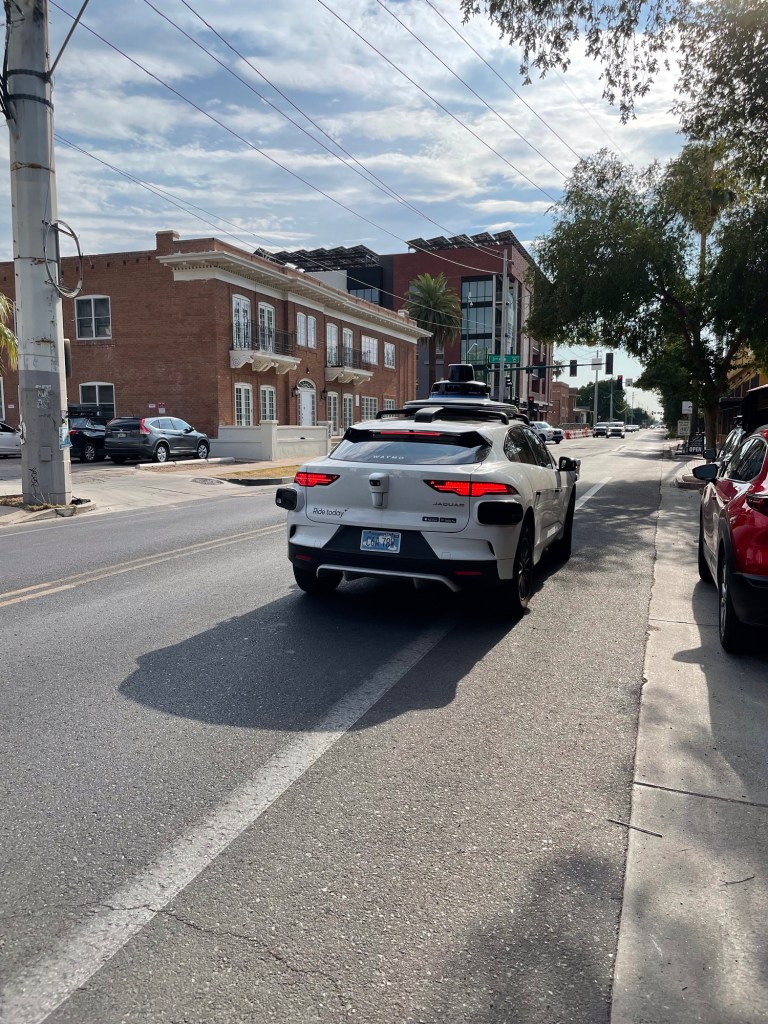
I have so much empathy for the driver trying to do the right thing. Returning to my experience driving out west, I was reminded of how stressed I feel when I drive…not because of being in car congestion, or of missing my turn, or of the prospect of a long drive, but because of these micro-interpersonal conflicts that emerge when being bullied to drive recklessly on roads that are practically begging you to break the law (my nerves were not helped knowing how lax gun laws are in Arizona 😩). What put my anxiety over the top, though, was a newfound terror – I suppose it’s an occupational hazard, but I was in a constant state of fear when I was driving: I was terrified I was going to hurt someone and was keenly aware of all the forces acting against my best attempts to drive safely. Amidst this angst was also a sense of guilt – how is it that I had spent most of my driving life not at all worried about the risk I posed to others every time I fired up the engine? For those of us particularly pessimistic about the state of humanity, how is it that we don’t even internalize how much we put ourselves at risk every time we drive?
Indeed, what kind of world do we live in where most of us have no choice but to use advanced technological equipment that poses such a grave danger to everyone around us whenever we travel?
The Planetizen article talked about the philosophical trolley car problem, where you are faced with the decision to keep a train on its current track which will kill five people, or change the trajectory of the trolley and only kill one person. It’s a helpful analogy to the challenges we face, and in some ways we could argue we’re stuck in a cruel iteration of the trolley car problem – I would just call it a car problem – where there are a lot of (often invisible) forces at work that create a transportation system that molds our behaviors in such a way that social harm is inherent, and in some ways even erodes our decision making ability at all. I’m not here to shame anyone – as alluded to, I used to have a driving life, and occasionally have no choice but to opt into that again. But what I am pointing to is just how deep our normalization runs (as that video suggests, we’re even willing to put our own interests at risk in pursuit of car supremacy), and how that normalization presents a profound moral quandary that we all need to grapple with, regardless of whether we see ourselves as global do-gooder citizens or as planners and engineers designing the neighborhoods and mobility networks of tomorrow.


Leave a Reply