Last week I shared some initial thoughts on Jon Haidt’s book The Anxious Generation, and the connections I saw between his diagnosis and prognosis of a significant social shift towards screens and my research about streets. Turns out there’s more where that came from!
Towards the end of the book in the chapter “What Parents Can Do Now,” Haidt shares Alison Gopnik’s concept of “the Gardener and the Carpenter” and the findings she reveals from her work as a developmental psychologist in a book of the same name. Her work suggested that prior to the middle of the 20th century, “parenting” wasn’t really a concept, much less one that had a full shelf (or section) at the local library or neighborhood bookshop. Before the 1950s, most people learned how to raise kids from their own parents or caregivers, from elders in their community, and from experienced neighbors willing to share their wisdom. By the 1970s (interesting how this timing intersected with US suburbanization patterns 👀), turning to parenting “experts” had officially gone old school viral, with books proselytizing the “right” ways to raise kids to anxious parents confronted with the challenges of bringing new humans into the world, offering training about how to whittle perfectly calibrated kids from the raw materials of a carefully constructed childhood. This expert brand of parenting – what Gopnik refers to as a carpenter mentality – centered values like precision and control as best parenting practice to produce successful children 📐
This perspective was fundamentally at odds with the gardener mentality – to create conditions for exploration, trial and error, and growth – that had shaped parenting practices for generations 🧑🌾 Haidt highlights Gopnik’s perspective that unpredictability and messiness are inherent parts of growing up and that caregivers should not make their kids learn through calculated and manicured experiences. Rather, they should let their kids learn by creating environments with the right amount of decision-making and risk-taking 🧗
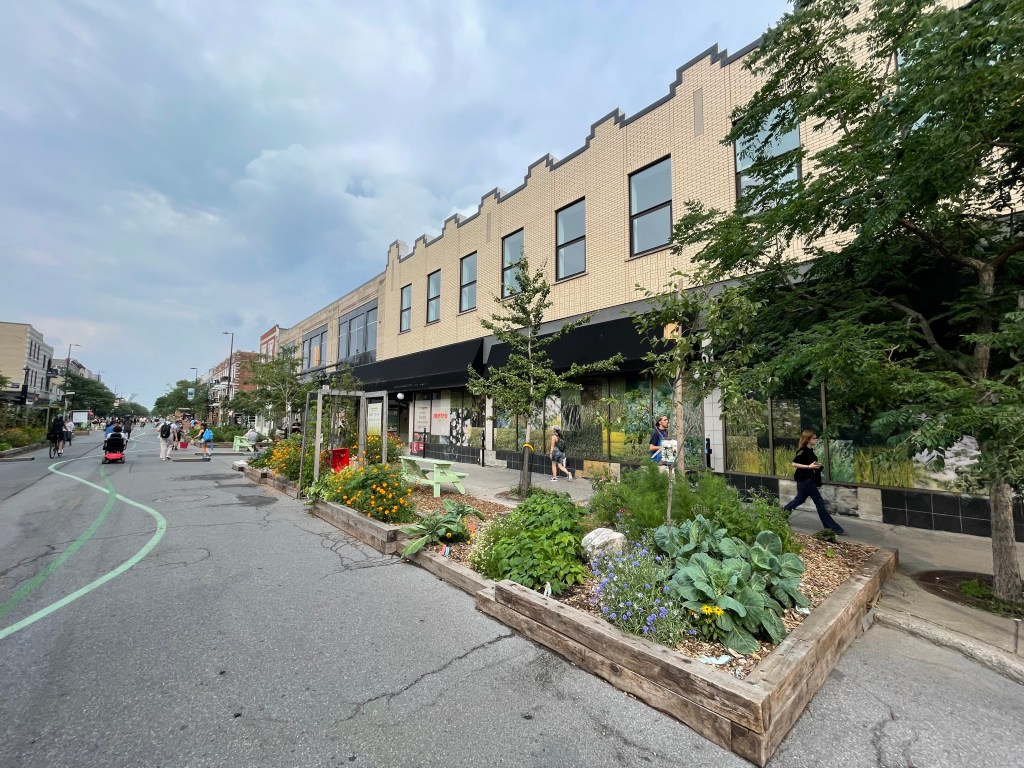
You may be wondering how this could possibly relate to transportation (did you catch the clue tucked in earlier about how moving to suburbs might have contributed to the need for expert-approved parenting techniques?! 🕵). Imagine, for a moment, what our streets looked like before the advent of the automobile. You wouldn’t find traffic lights, ubiquitous signs, policed traffic stops, markings designating who belonged where. Like the shared spaces envisioned by Dutch traffic engineer Hans Monderman, we didn’t need to be bombarded by an abundance of information to tell us how to navigate our built environment. We used our senses, our intuition, and subtle cues from other road users – all of whom were going at a speed that allowed them to be attentive and responsive to other people using the street. (As I imagine this scene, I think of Jane Jacobs’s famous “eyes on the street” – the elders looking out their windows, keeping tabs on the goings-on of the neighborhood – as perhaps the OG street gardeners 👵🏻). The introduction of cars changed that dynamic. Separated from other road users by glass and metal while traveling at speeds that turned them to a blur, drivers required a host of interventions to control their behavior – interventions implemented by disciples of precision engineering.
What if instead we thought of streets, like children, not as products to be engineered but as living things that come in many varieties and when left to their own devices – with some gentle guidance – thrive in their unique way?
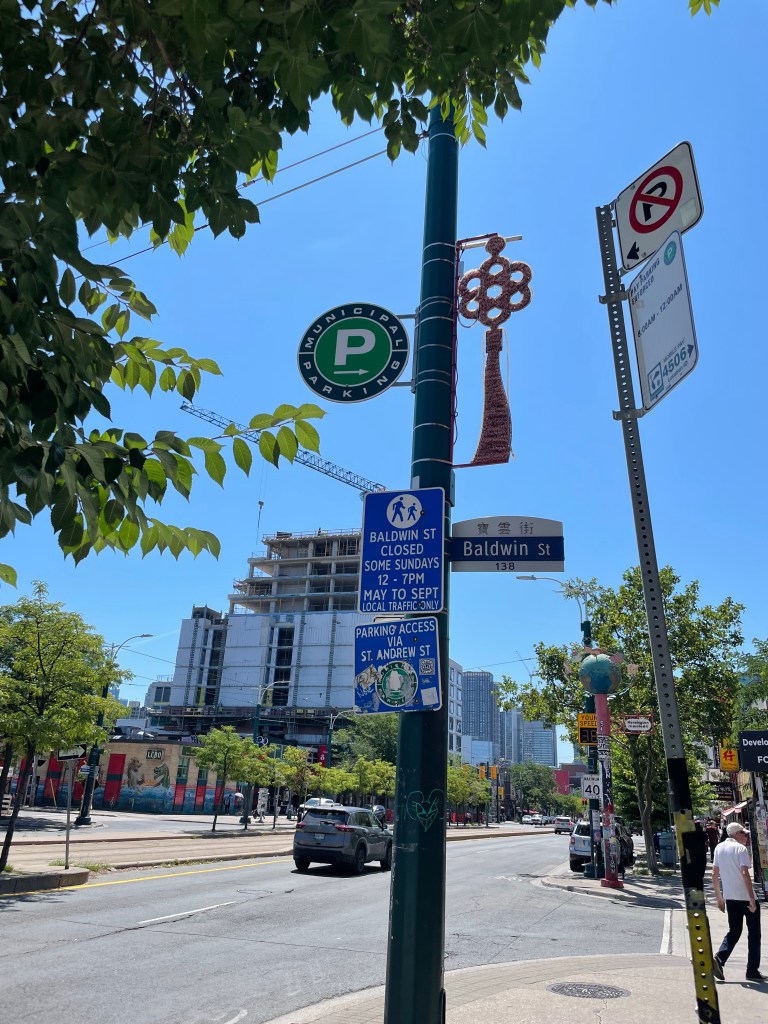
Pardon a bit of a detour, but this reminds me to a point I alluded to in Part I – there is a question in advocacy circles about how much we should highlight the dangers of our streets, especially for road users unprotected by thousands of tons of steel and made vulnerable by poor road design and personal choices. By focusing on the danger, we are likely discouraging walking and rolling (which has the ironic effect of making our streets even less safe thanks to power in numbers). This is a conundrum, and I don’t entirely know where I land. What I do think, though – and what Haidt’s book helped me puzzle through – is that our streets are not inherently dangerous. The supersized speeding vehicles that are used on them – the same ones that made signs and markings so necessary – are what causes the danger. Though I certainly understand how design creates unsafe streets that contribute to reckless or careless driving – and push for safe designs and infrastructure in my own advocacy – only taking away cars would effectively eliminate deaths on our roads (this of course reminds me of the problems with the gun-rights slogan, “Guns don’t kill people, people kill people”).
Our engineering systems (and legal – and planning – systems for that matter) have thus duped us by completely flipping our notions of harm and risk. When otherwise smart people can convince their elected officials that bike lanes make streets less safe (they don’t), when sidewalks on streets are not standard practice, when planners create communities where people have no choice but to pose risk to others when they need to go anywhere worth going (thanks, sprawling suburbs!), when these system criminalize and leave unprotected the road users that pose virtually no risk to anyone yet bear the brunt of harm posed by dangerous vehicles, I think we do need to talk about risk and danger if only to set the record straight about what generates it.
And I think as advocates we need to have a better vision that we can share with others about what we’d gain if we addressed that risk. My pitch? A field. Perhaps one with some hidden prickers, occasional pests, and seasonal pollen. But one undoubtedly overflowing with wildflowers. What vision do you have for a transportation system tended to by gardeners? ✌️🚸

 Peace and Planning
Leave a comment