
The deeper I get into my doctoral program, the more I’m reminded of how important language is. The deeper I get into my dissertation research, the more I’m reminded of how inadequate our current language is to fully grapple with the impact that cars have on society. I’ve already written about vehicular violence. I’ve pondered the violence inherent in cars and chronicled some of the ways that our reliance on cars creates cycles of harm. Of course there’s car culture (though I imagine different people would interpret it in more charitable terms). Sociologists Mimi Sheller and John Urry (2000) coined the term “automobility” to capture the systemic forces that perpetuate our dependence on cars, to include powerful elements like manufacturing interests, the connection between consumption and the car as status symbol, and the sprawling web of industries spawned from cars (think insurance companies, gas companies), among others. Psychologists have even defined the “unconscious biases due to cultural assumptions about the role of private cars” as motornormitivity (Walker et al., 2023). While these are all important perspectives that illuminate different aspects of the hold cars have on our society, they don’t – IMHO – capture the full extent of what we face if we want to make our transportation system peaceful. That’s where the concept of car supremacy is helpful.
Before I continue, however, it is important for me to emphasize that I am in *no way* attempting to equate white supremacy and car supremacy. White supremacy is one of (white) society’s most shameful legacies and has caused untold suffering for hundreds of years. While our conceptualization of white supremacy may help us to better understand the dynamics of car supremacy, the impacts of car supremacy pale – to an unfathomable degree – in comparison to those of white supremacy.
That said, when we consider, for instance, the following definition of white supremacy offered from the University of Colorado-Boulder, we can begin to unpack the parallels.
“White supremacy is an ideology, a pattern of values and beliefs that are ingrained in nearly every system and institution in the U.S. It is a belief that to be white is to be human and invested with inalienable universal rights and that to be not-white means you are less than human – a disposable object for others to abuse and misuse.”
Jennifer Ho
Does our relationship with cars constitute an ideology? One definition of ideology is “the set of beliefs characteristic of a social group,” and cars deliver here in spades. Nearly every American has bought into the same story about what cars represent. Cars are a convenient vehicle (no pun intended) for our idea of individualism – we might pick their colors to match our personality, cover them in bumper stickers that profess all of our likes and dislikes, and adorn them with decorations ranging from holiday decor to sports paraphernalia, and even human features like giant eyelashes (as well as insulting symbols like Confederate flags). This spirit of individualism extends beyond ourselves – sometimes our cars are given their own identities (I used to have a car named Lola so I’m guilty of this, too) and in the most absurd cases, sometimes they are personified and promoted to such an extent that they can garner bigger social media followings than actual humans 🙄 In another example, I’d bet when most folks conjure a mental image of the American Dream, it includes a house with a white picket fence next to a driveway…with a car parked in it. Perhaps the most tightly held belief, however, is that cars are synonymous with freedom and independence, values that are so foundational to the American ethos that they are literally what our country was built upon. One need look no further than the conspiracy theories swirling on the right about the 15-minute city to see how intricately connected the notions of car ownership and freedom are in our collective psyche.
How about a “pattern of values and beliefs that are ingrained in nearly every system and institution in the US”? I would say very nearly. When you get to the airport for a domestic flight, do you hand them a voting card or a community center ID? A vast majority of folks would hand over their driver’s license – indeed, reaching the legal driving age is often celebrated with as much fervor as reaching the legal drinking age. When we talk about how far something is, we often reply in minutes rather than miles – minutes, that is, that it would take driving in a car (a time that is often clarified to be inclusive or exclusive of likely traffic delays) because it is rightly assumed the travel time is by car. Beyond these innocuous examples are much more detrimental ones – media accounts and police reports of crashes often blame pedestrian and cycler victims, drivers who kill people in crashes are almost never held accountable through the criminal legal system, “jaywalking” laws across the country (the term jaywalker was created by automotive interests to fundamentally remake our understanding of public rights of way for the benefit of their bottom lines) unfairly demonize an activity that was critical to our evolution as a species, and even our word choice of “accident” displays a willful ignorance of the confluence of forces that – if addressed – would prevent the more than 40,000 deadly crashes that happen on our roads every year. Past posts are replete with other examples and if you’re still not convinced, here’s a fun activity: throughout your day see how often cars and all that they represent emerge in seemingly benign situations.
What about “the belief that to be [a driver] is to be human and invested with inalienable universal rights and that to be not-[a-driver] means you are less than human – a disposable object for others to abuse and misuse”? As I’ve previously mentioned, research has found that cyclists are often seen to be less than human, and one of the most offensive (and ubiquitous) bumper stickers (license plate frames/now it’s on tee-shirts and hats?!) lets pedestrians know just how little car drivers value their lives. As far as abused and misused…just the other day I experienced a close call with a driver who accelerated into their turn as I was walking with the crosswalk signal with such disregard that I had to run out of the way to not get crushed by their oversized vehicle. This is just one of countless examples of drivers restricting pedestrian movement by using their vehicles as tools of coercion while in other domains denying resources to ensure people outside of vehicles can travel safely.
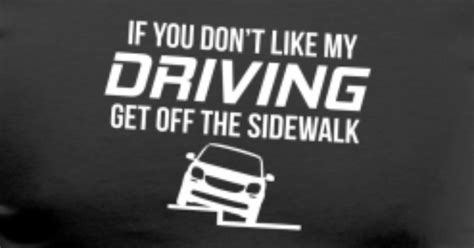
Indeed, most drivers will tell you they have a right to the road, and would argue that right is inalienable (they might even assume it’s in the US Constitution – to clarify: it’s not). And this is where I believe perhaps the most crucial element of car supremacy rears its ugly head. Because car supremacy is ultimately about a modal hierarchy in which cars are at the top and all other modes must fight for scraps, any challenge to that power structure is met with steadfast resistance and fierce opposition. People don’t want to be inconvenienced, don’t want to lose their sense of freedom, don’t want their identities attacked, and every attempt to rebalance our road space so cars aren’t prioritized – as in, we’re not talking about abolishing cars, we’re talking about re-investing a fraction of the money that has been spent to make cars the dominant mode of transportation in the US for the past century – turns otherwise progressive-minded liberals into the NIMBYs of transportation policy. You know you have a supremacist culture when those at the top will fight tooth and nail to maintain their comfy perch at the top.
So there you have it, my take on why we need a massive rethink in our language to fully grapple with the influence cars have on pretty much every aspect of our lives – and how their hold on our society is strengthened by those who benefit from this power structure. I could spend hundreds of words unpacking the concept of car supremacy, but I’ll leave that for future posts…in the meantime, I invite you to get curious – what comes to mind when you envision a more peaceful transportation system? ✌️🚸

 Peace and Planning
Leave a comment