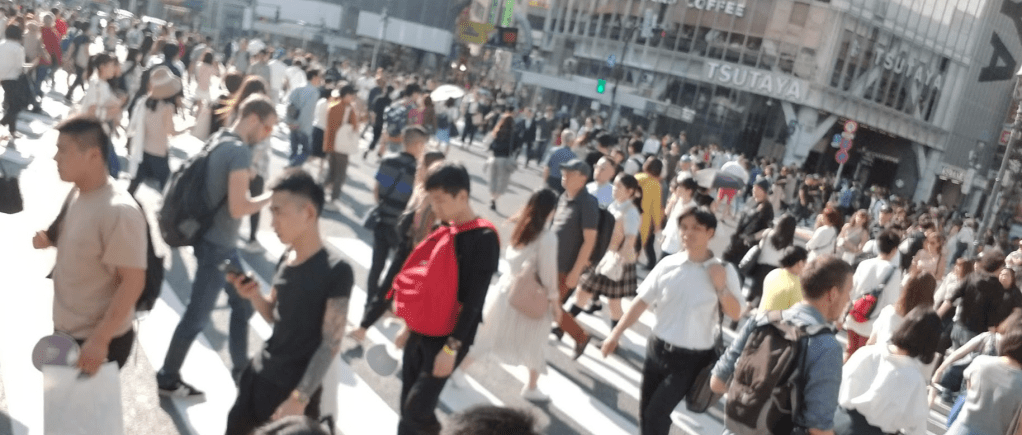
Over the past couple of weeks, I’ve focused on reading about Allport’s contact theory (1954) which hypothesized that the right kind of contact (see four conditions below) could reduce intergroup prejudice. As perhaps one of the most studied theories in the social sciences, it posits that 1) cooperative contact between 2) equal-status groups 3) supported by institutions in pursuit of 4) a common goal would, for instance, reduce prejudice of white people against Black people. Scholars have critiqued Allport’s theory – for one, in the example provided, Black people are conceptualized as the “out-group” and in turn, have much to lose from such contact situations (White and Laird, 2020) given the “particular historical and geographical contexts of power relations between and within social groups (e.g. Leitner 2011; Ahmed 2000)” (Matejskova & Leitner, 2011) – but countless studies have confirmed that in general, Allport’s original theory holds water even when the four conditions he specified aren’t present (Pettigrew et al., 2011).
Despite decades of research showing that contact theory stands up to scholarly scrutiny, little is known about how it performs when implemented outside of the laboratory. Wessel (2009) contends that this oversight is particularly apparent when examining contact theory from the perspective of urban spatial theory given real-world situations of people interacting at the street level as they go about their days. Instead, Wessel argues that not considering the unique nature of cities – with their frequent casual contact and diversity (of people in Wessel’s view, but I would argue of spaces and activities as well) – is a glaring omission.
While the literature is broad and deep and I’ve just dipped into a small ripple of its extent, this is a pattern I’ve already observed. This may be because so many contact theorists wouldn’t consider the types of interaction that are prevalent in urban areas as ‘true’ contact. In fact, in Pettigrew et al.’s (2011) most recent meta-analysis of contact theory literature, they discounted previous reviews that had “included studies that used intergroup proximity, rather than established contact, as the independent variable” (p. 274) and only referenced one type of ‘indirect’ contact (in which having an in-group friend with an out-group friend makes one less prejudiced) (p. 277). That is exactly Wessel’s point, though, as the type of contact Allport and his disciples espouse rarely happens in reality and thus any findings emerging out of artificial situations have limited applicability beyond the walls of a laboratory. In other words, it’s one thing to present evidence in support of a theory when you can control for myriad variables…it’s another matter to show that the theory holds up when people interact in their natural environment.
In reading Wessel’s critique, I was intrigued about the possibility it suggested for studying streets as spaces of informal encounter and imagined that urban spatial theory scholars had also recognized this opportunity. To my surprise, it appears that Wessel and other urban spatial theory scholars may also be suffering from tunnel vision – not in how they think of urban areas and their usefulness for testing the limits of contact theory, but in their treatment of streets. I have much to discover in this vein, but thus far my introduction to urban spatial theory reveals a trend in which scholars do not offer a detailed description of their conceptualization of streets. Given that streets have played a central and varied role in societies for millennia, it is somewhat understandable that a more precise definition is so infrequently outlined. However, this lapse leaves much to the imagination.
When researchers study street encounters, are they hearkening back to Jane Jacobs’s somewhat idyllic (and unspecific) representation of streets in her tome Death and Life of Great American Cities as Wessel does (“Tolerance, Jacobs (1961, p. 72) asserted, is possible and normal only when streets of great cities allow strangers to ‘dwell in peace together in civilized but essentially dignified and reserved terms’ [Wessel, 2009, p. 5]) and if so, what does that mean and how closely does that mirror streets everywhere? Is their use of street more emblematic of a racialized term that evokes ‘inner-city’ life (Keith, 2005) or as a catch-all term to describe how some people live (e.g., people who live in tents or informal settlements along the road)? When they mention streets as a locus of movement, what modes of transportation are they picturing…or are they considering that different modes of transportation might have different interactions with the road and in turn suggest different outcomes when viewed from the perspective of contact theory?
Indeed, streets can be places that facilitate the movement of people and goods, places that support civic infrastructure like markets and block parties, places that host diners alongside kids playing, and places that present myriad opportunities to encounter the Other. By not specifying the way in which streets are being studied, any findings about urban encounters in street space are difficult to replicate or generalize. It seems as though much of the existing literature that explores contact theory through the lens of urban spatial theory is limited to the types of activities that people may do in streets (such as street markets or playing chess on sidewalks with tables) as opposed to how people use streets to navigate the built environment. One notable exception I stumbled across emerges in Clayton’s (2009) “Thinking spatially: Towards an everyday understanding of inter-ethnic relations” (p. 483-484):
“de Certeau highlights the ways in which the life of the streets is practised and inventively re-created through the ruses and tactics of the ordinary man [sic]. In this way the ordinary spatial trajectories of individuals are deemed vital contributory elements to the character, use and transformation of urban space. Drawing on de Certeau’s idea of the city walker, Secor points towards the active and productive construction of identity and difference:
City walkers traverse interlacing ‘grids of difference’ and find themselves taking up particular subject positions in relation to the various (religiously, ethnically, or class-based) communities and spaces that organize their spatial trajectories. As their footsteps narrate urban stories—fixing, assembling, traversing, and transforming urban boundaries—urban travellers become active participants in the production of difference, identity, and citizenship. (2004: 358)
While these ‘walkers’ are situated by unequal socio-economic positions and the demands of the communities in which they are caught up, their trajectories are not inherent, nor passively restricted to a single form of identification but actively (re)created within ‘grids of difference’ (Pratt 1999).”
This characterization of the relationship between pedestrians and the built environment suggests that there is much to explore in how movement through urban spaces can influence a person’s interactions with themselves and the world around them.

 Peace and Planning
Leave a comment