I arrived at the end of 2021 feeling exhausted yet exhilarated – I had completed my first semester as a PhD student without fumbling spectacularly. I had read thousands of pages of literature (favorite books: Bananas, Beaches, and Bases; Constructing Community; Street Fight), had grappled with hundreds of ideas and questions posed in books and classroom discussions, and had written dozens of pages as I tried to disentangle my own thoughts about all I had learned and contemplated. In a surprise turn of events, my professors generally regarded the written explorations of my mental morass as coherent, although one astutely pointed out the root of what made me feel the most uneasy about the whole endeavor: I have a LONG way to go until I narrow in on a dissertation topic (let alone dissertation question).
That has prompted a lot of reflection over the past few weeks, and I think I’m starting to chip away at the figure hidden within the concrete block in front of me (to reference how one professor described the dissertation discovery process). More to come on this journey, but I’m looking forward to coursework over the next two semesters that will support me in determining which doors to close and which windows invite some closer inspection.
A dear friend recently shared a podcast episode with me, and it’s one I’d highly recommend (https://podcasts.apple.com/us/podcast/should-i-still-have-kids-if-im-worried-about-climate-change/id1438157174?i=1000518082105). It got me thinking about 1) an idea and 2) a conundrum.
- The speakers reference studies that indicate an overwhelming number of carbon offset programs are bunk. Apparently the math behind planting trees half-way across the world isn’t convincing. However, one thing scientists do agree definitively does contribute to lowered emissions is going car free (as someone who has done this herself, I can also attest that it makes life generally more pleasant – no fighting traffic, no prowling for parking spaces, no crash anxiety, and no turning into my worst, most disgruntled self as soon as I get behind the wheel). I’m also fortunate enough to be able to live in a city with a pretty robust public transit system (despite all the complaining us Washingtonians do, it really is leaps and bounds beyond where most of the country is), although also live in a city where – despite the decent transit network – a lot of folks find it cost prohibitive.
- So here’s the idea: While I love trees as much as the next person (maybe even more), how about instead of donating to charities that plant trees abroad we instead contribute to a local transit-offset fund? In other words, before you click “purchase”, you could opt to offset the emissions you would generate by donating to a fund that incentivizes others to reduce their transportation-driven carbon footprint. The revenue could be deployed in myriad ways, but two that come to mind are free Metro rides for low-income folks or a tax credit for folks who don’t register a car in DC. Neither of these is perfect (e.g., there are lots of folks who live in DC but register their car in different states), but I don’t think we have the luxury of letting the perfect be the enemy of the good given the climate crisis we face.
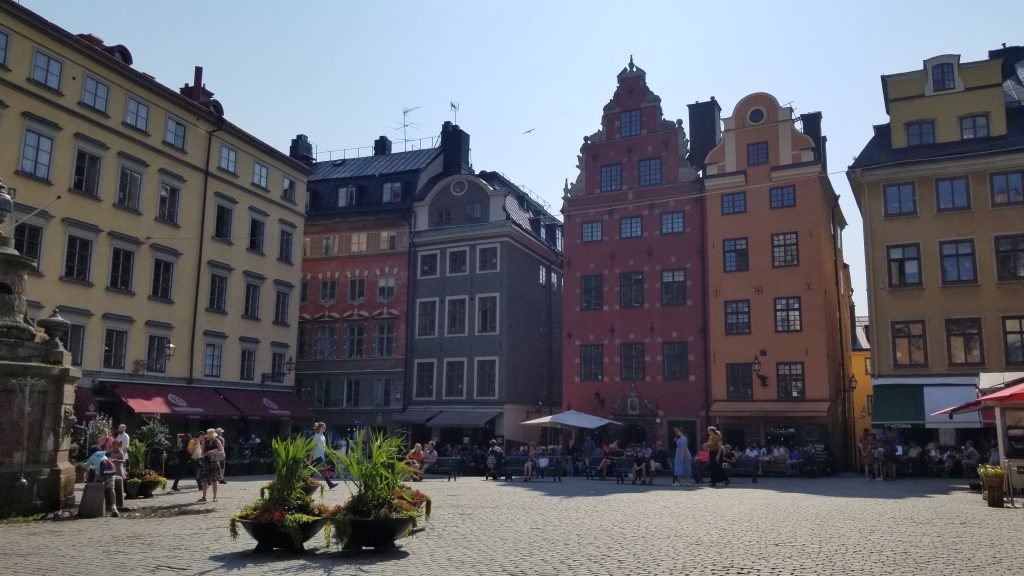
- While I have gone car-free, I haven’t gone flight-free (heck, the picture featured in this post was taken during my trip to Sweden). I try to take Amtrak when I can (💜 🚂), but unfortunately our rail system is not as connected as one might hope – and of course, it also does not cross any oceans. In an ideal world, we wouldn’t need carbon offsets because we’d be willing to sacrifice conveniences and ways of living that we’re privileged to have but that exacerbate the impacts of climate change. So the idea I propose is nowhere near a panacea, and in fact perpetuates this notion that we can buy our way out of a crisis that we are causing. It is offered as a better alternative to the current structure, a structure that we can hopefully move away from sooner rather than later. And in the meantime, we all need to do better. This brings me to #2.
- In listening to the podcast, I was struck by a thought: progressives find it easy to call out folks who choose not to mask or get vaccinated, arguing that their selfish decisions undermine a greater sense of community and humanity as we struggle with a pandemic that puts lives at risk when individual action isn’t taken. I am one of those progressives, and do find it baffling that some people would rather hold onto one version of freedom (one’s to not wear a mask) without recognizing that it compromises another version of freedom (another’s to live without contracting a deadly virus). That said, I don’t think progressives have done a good job of recognizing that working towards a greater sense of community and humanity is undermined when we make decisions that compromise our climate.
- I realize there are nuances here: we see people suffering from COVID every day and all around, but climate change impacts are not as acute or salient for everyone (although that is increasingly not the case). There are two primary individual actions that can lessen the impacts of COVID (masking and vaccinating), whereas nearly every action we take worsens climate change. Moreover, the two primary individual COVID precautions are relatively one-to-one in terms of cause and effect (if one person doesn’t wear a mask, they could infect another person), but climate change precautions are much more lopsided (how much does leaving the light on for an additional minute impact the climate)? Lastly, I would argue that wearing a mask is a minor inconvenience (especially in comparison to contracting the virus), yet some of the lifestyle changes that would result in a significant reduction in individual emissions could compromise someone’s rights or way of life (e.g., choosing to have children, choosing to live in a socially-networked suburban area rather than in a transit-networked urban area).
- In raising this line of inquiry, I’m not suggesting that everyone should immediately stop any and all activities that contribute even the tiniest bit to climate change – that would be a tall order. Nor am I suggesting that no one should have children, or that no one should fly on an airplane. What I am suggesting is that before we righteously accuse people of being selfish, we explore how our own decisions are contributing to a different crises, earnestly make changes (some of which might be uncomfortable) for the sake of the greater good, and be really darn honest with ourselves about the impacts of our choices that we aren’t willing to compromise on…and hopefully do whatever we can to limit the impacts of those choices.
 Peace and Planning
Leave a comment